E-File Technique
E-File Bits for Russian Manicure: Shapes, Grits & RPM
The bit set is small — but choosing shapes, grits and the right speed is what separates a clean, safe cuticle from a torn one.
A working Russian-manicure bit set is small: a carbide bit for removing old product, a fine (red-band) diamond flame or needle bit for opening the cuticle and lifting pterygium, a small ball bit for cutting and polishing the cuticle line, and a soft silicone polisher for the surrounding skin. Speed matters more than the bit itself — most cuticle work sits between roughly 5,000 and 20,000 RPM, adjusted to the client’s skin, and you stop the moment you feel heat.
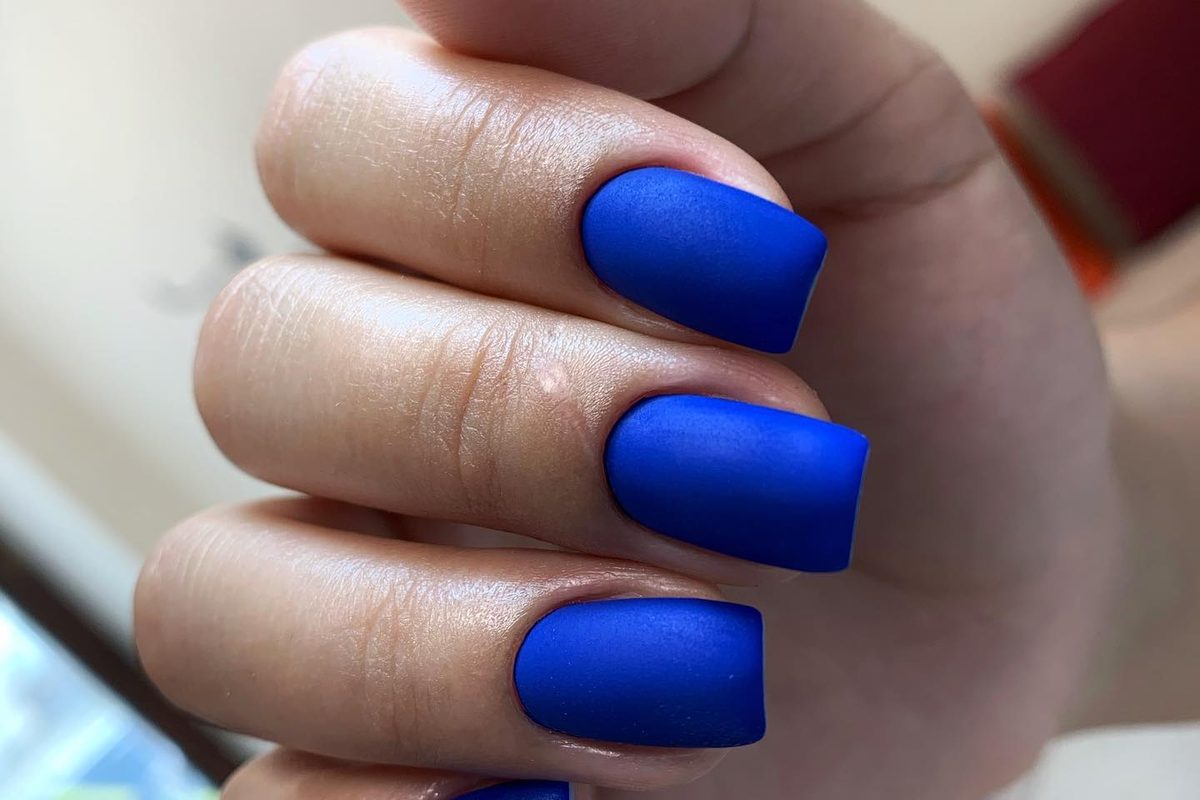
The e-file is what separates a clean, dry Russian manicure from a regular (classic) one, but the machine is only as safe as the bit on the end of it and the speed you run it at. Choosing bits isn’t about buying the biggest kit — it’s about understanding what each shape does, which grit suits which skin, and the RPM range that gives you control instead of heat. This guide breaks down the essentials the way they’re taught in our e-file manicure course, the Advanced Clean Manicure System.
Bit materials: what they’re actually for
E-file bits are grouped less by brand than by what they’re made of, and each material has one job it does best:
- Carbide — tungsten-carbide bits with cut flutes that shave down gel and hard material fast. Cuts run from fine to coarse, and the flutes are made for one direction of rotation: run a standard (right-hand) cut in forward and a left-hand cut in reverse. These are your removal bits, not your cuticle bits.
- Ceramic — a gentler removal option. Ceramic bits tend to build up less heat, which makes them kinder to thin natural nails, but they remove material more slowly than carbide.
- Diamond — steel bits coated with diamond grit, with a color band that shows how coarse the grit is. They do the delicate work: lifting the cuticle, cleaning pterygium, refining the cut line. This is where the flame, needle and ball shapes live.
- Silicone / silicone-carbide — polishers and buffers for the skin, color-coded by softness. They can be sterilized, but they must never touch the natural nail plate — smoothing the plate kills adhesion and invites lifting, one of the main things that decides how long a Russian manicure lasts.
- Sanding bands — paper sleeves on a rubber mandrel. They are single-use and belong to product shaping and pedicure, never to cuticle work.
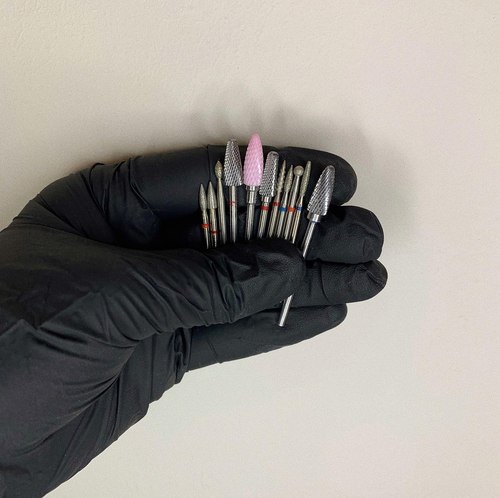
Cuticle drill bits: the shapes that matter
You can perform a full clean manicure with two or three diamond shapes. Learn these before you buy anything exotic — the chart shows the cuticle shapes and the three removal shapes you will meet most often.
Diamond bits shown with their color band (red = fine, blue = coarser). Carbide shapes are removal bits and never touch the skin.
Flame / needle bit
The flame is the workhorse of cuticle prep; the needle is its slimmer version for narrow sinuses and small nails. The working set in our guide has two flames: a sharp-tipped one with a red (fine) band and a blunter one with a blue band for rougher skin. The flame opens the proximal fold pocket, removes pterygium from the nail plate, and cleans the lateral sinuses. It has distinct working surfaces — the cheek (the side, for the sinuses and grown-out area near the cuticle) and the belly (for the central zone). The single most common beginner injury — tearing the eponychium — happens when the pocket isn’t opened first and the flame is driven in at high speed.
Ball bit
A ball bit (optimal diameter around 0.23–0.25 cm) can lift, cut and polish the cuticle in one tool. It has three working surfaces worth knowing: the shoulder (between the equator and tip) thins and lifts the cuticle, the edge / equator (the widest part) cuts the thinned cuticle, and the tip polishes the finished cut. To cut cleanly with a ball alone, the cuticle has to be perfectly thinned and lifted first — which is why many technicians trim with nippers and simply refine with the ball.
Bullet and cone bits
A bullet (a cylinder with a rounded tip) cleans the sidewalls and lifts the cuticle with less risk of digging than a sharp flame, and a narrow cone reaches into the lateral folds. Neither is essential on day one; many technicians add them once the flame and ball feel natural.
Removal bits: corn, barrel and safety bit
Removal is carbide or ceramic work. The corn bit, with spiral cuts that look like a corncob, takes gel down across the surface; the barrel has flat sides for removal and for leveling; a safety bit is a barrel with a smooth, rounded top, so its end can’t cut the skin when you work close to the cuticle. Removal runs at higher speed than cuticle work and always stops short of the natural nail.
Silicone polishers
These finish the skin, and their color tells you their abrasiveness — the lighter the bit, the softer it is. Coarse (brown) grades can work inside the cuticle pocket to remove pterygium; softer (green, gray) grades add shine to the cut line. Rule that never bends: a polisher touches skin, never the nail plate.
Grits: the color bands, and why cuticle work uses two
Most bit makers borrow the color code used for dental diamond burs: black for super coarse, then green, blue (standard or medium, sometimes left unmarked), red for fine, yellow for extra fine and white for ultra fine, according to this diamond bur color chart. Nail bits are not formally standardized, so always check the maker’s own chart.
For cuticle work you mostly live between two bands:
| Band | Grit | Use it on |
|---|---|---|
| Red band | Fine — universal | Normal, moderately dry and moist skin. Your everyday cuticle bit. |
| Blue band | Medium on the dental scale — the coarsest you normally use on cuticles, so nail techs call it “coarse” | Keratosis and very dry, rough skin (and most pedicure work). |
| Green / black | Coarse / super coarse | Calluses and hard product only. Never near the cuticle. |
| Yellow / white | Extra / ultra fine | Light finishing on very thin, delicate skin. |
File abrasiveness follows the same logic as hand files: grit counts the abrasive particles per square centimeter, so more particles means smaller particles means a softer file. On natural nails you stay at 150 grit and above; anything coarser is for artificial material only.
Safe RPM: the numbers that keep skin intact
This is the part cheap online tutorials skip. The right speed depends on the task and the client’s skin type, and higher is almost never better — more speed means less control and more frictional heat. Manufacturer guidance points the same way: Medicool’s e-file guide puts cuticle work at roughly 6,000–8,000 RPM.
| Task / skin | Approx. RPM |
|---|---|
| Product removal (carbide) | 20,000–35,000 |
| Flame work — normal skin | 15,000–20,000 |
| Flame work — dry / rough skin | 20,000–25,000 |
| Flame work — moist skin | ~18,000 |
| Cuticle cutting — normal skin | up to 15,000 |
| Cuticle cutting — moist skin | 5,000–12,000 |
| Cuticle cutting — “rubbery” skin | ~10,000–12,000 |
| Refining / polishing the cut | 5,000–15,000 |
For the machine itself, a comfortable working ceiling for manicure is around 30,000–35,000 RPM, with recommended power of roughly 60–64 watts. Moist and “rubbery” skin is the trap for beginners: at high speed the handpiece vibration alone can tear it, so you drop the RPM and use short, stitch-like movements.
Heat is the warning sign. If the bit starts to burn, the cause is almost always a clogged or dull bit, movements that are too slow, too much pressure, or staying in one spot. Keep the bit moving, ease the pressure, and clean or change it — don’t just push through.
Bit care, lifespan and sterilization
Bits are an investment and a hygiene liability, so treat them accordingly — and the CDC treats sterilizing shared nail tools as a baseline, not an extra. In practice:
- Lifespan — a removal bit typically lasts 50–100 clients before the shank starts to deviate; diamond bits dull gradually and lose their cut.
- Files and buffers are single-use. Diamond and carbide bits are reusable only if they go through the full chain: rinse under running water, disinfect, pre-sterilization cleaning, then dry-heat sterilization.
- Tension checks — make sure the bit seats firmly and doesn’t loosen mid-service; a wobbling bit is both a quality and a safety problem.
The bit is half the skill
A great bit in an untrained hand still tears skin; a modest set in a trained hand produces a flawless, safe cut. Bit shapes, grits and RPM only make sense once you understand nail anatomy, how to read a client’s skin, and how to open the pocket before you ever bring the flame in — which is exactly the sequence our Russian manicure course is built around.