Longevity
How Long Does a Russian Manicure Last?
Three to four weeks is the honest answer — but whether you get three or five comes down to prep and technique, not the polish.
A Russian manicure typically lasts 3–4 weeks — and 4–5 weeks when paired with builder gel — noticeably longer than the 1–2 weeks of a classic manicure or the 2–3 weeks of a standard gel. The reason is the dry prep: removing all the dead cuticle and pterygium and skipping the water soak lets gel bond directly to a clean, dry nail plate.
Longevity is the main reason clients pay a premium for a Russian manicure, so “how long does it actually last?” is a fair question. The honest answer is a range, and the more useful answer explains what drives it — because whether you get three weeks or five depends far more on prep and technique than on the polish. (For the method itself, see what a Russian manicure is.)
How long do Russian manicures last? The numbers
Reported wear from industry coverage and salons is remarkably consistent:
- Russian manicure with gel polish: about 3–4 weeks.
- Russian manicure with builder gel: often 4–5 weeks.
- Standard gel manicure (wet prep): roughly 2–3 weeks.
- Classic manicure with regular polish: around 1–2 weeks.
So the technique buys you an extra one to two weeks over a conventional gel — which is why, even at a higher price, many clients find it works out even over time because appointments are spaced further apart.
Why it lasts longer
Three things, working together:
1. Dry prep, no swelling
Soaking the hands swells the nail plate. Apply gel to a swollen plate and, as the nail contracts back to normal, the coating is put under stress and can lift — often as a gap at the cuticle. A Russian manicure is performed completely dry, so the plate is stable when the base goes on. This is the biggest single factor.
2. A clean plate and a flush line
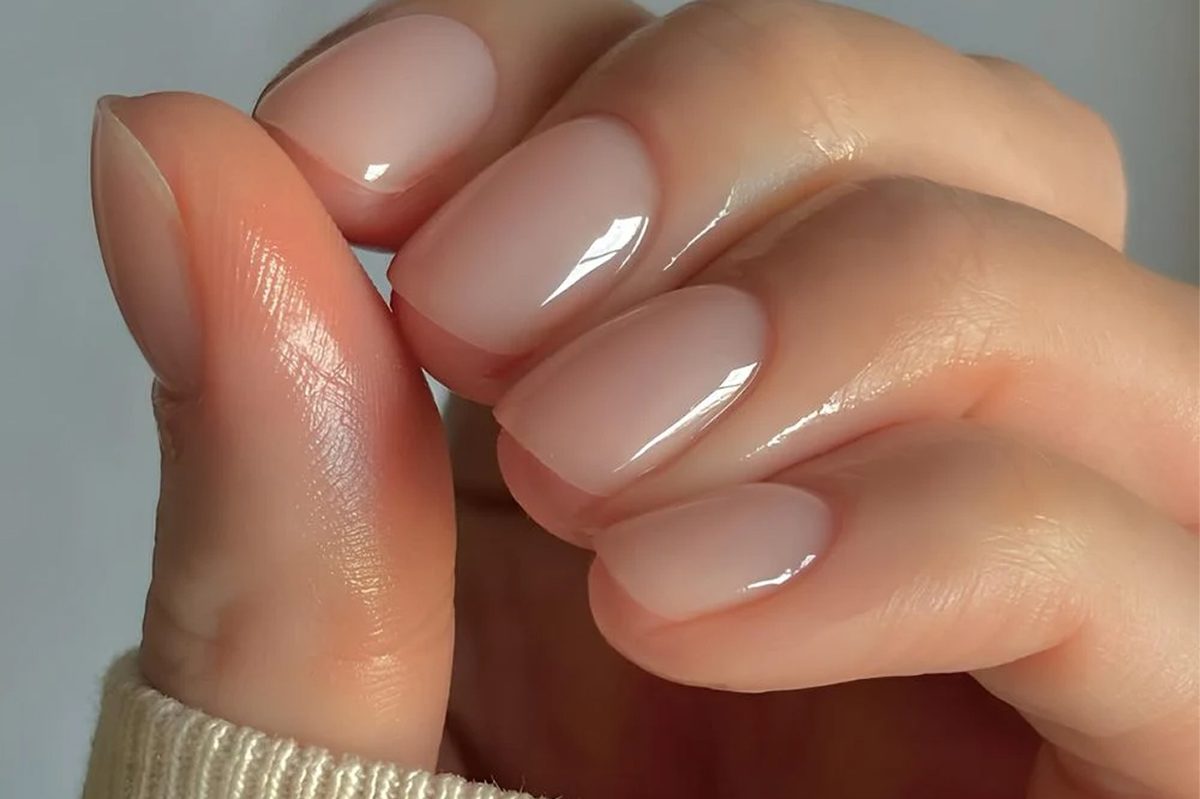
Removing the dead pterygium bonded to the nail plate means the base coat adheres directly to clean keratin, not to a layer of dead skin, and polish can sit flush to — or just under — the cuticle. There’s no thin margin to catch, lift or discolor, so the manicure grows out as a clean line rather than chipping back.
3. Architecture that manages stress
Wear isn’t only about adhesion — it’s about load. A skilled technician builds the nail’s architecture, placing the thickest material (the apex) over the stress zone so force is distributed instead of concentrated at a weak point. Correct architecture is a large part of why a well-built manicure resists cracking near the free edge and the corners.
What shortens it
When a Russian manicure fails early, the cause is almost always one of these — and most are technique, not bad luck:
- The wrong base for the nail type, or a base applied too thin to reinforce a weak nail.
- Over-filing the dorsal layer — the thin top layer of the plate that provides grip — which destroys adhesion.
- Poor prep: product touching the skin, weak degreasing, or residual cuticle remover or oil on the plate.
- Skipped architecture on an arched, long or weak nail that needed reinforcement.
- Client factors: picking at the coating, prolonged water exposure, or very sweaty hands.
How to make it last
The technician controls most of it — correct base and architecture, clean prep, and coatings matched to the nail. The client controls the rest with simple aftercare that mirrors what dermatologists advise (the American Academy of Dermatology recommends limiting water exposure, wearing gloves for cleaning and washing dishes, and moisturizing after hand washing):
- Use cuticle oil daily to keep the surrounding skin healthy and flexible.
- Wear gloves for cleaning and prolonged water contact.
- Don’t pick or peel — let a technician remove the coating properly to protect the plate.
It grows out, it doesn’t chip off. A key part of the appeal: because the polish sits flush to a clean cuticle, a Russian manicure grows out as a tidy line rather than lifting or chipping — which is what makes 3–4 weeks look presentable rather than ragged.
The bottom line
Three to four weeks is the honest expectation, five with builder gel, and the difference between the low and high end is prep and skill. That’s also why longevity is really a training story: the same technique in a trained hand lasts weeks longer than in an untrained one. If you want to see how the prep, base and architecture fit together, that’s the core of our Russian manicure course — and it’s closely tied to doing the work safely.