Comparison
Russian Manicure vs Regular Manicure (and vs Gel)
Two legitimate services that solve different problems — here’s how the technique, wear time, safety and cost really compare.
A Russian manicure is a dry technique that uses an e-file to remove dead cuticle and pterygium for an ultra-clean line and roughly 3–4 weeks of gel wear. A regular (classic) manicure soaks the hands and pushes back or trims the cuticle with hand tools, giving a softer result that typically lasts 1–2 weeks. The core differences come down to three things: dry versus wet prep, e-file versus hand tools, and how close the polish can sit to the cuticle.
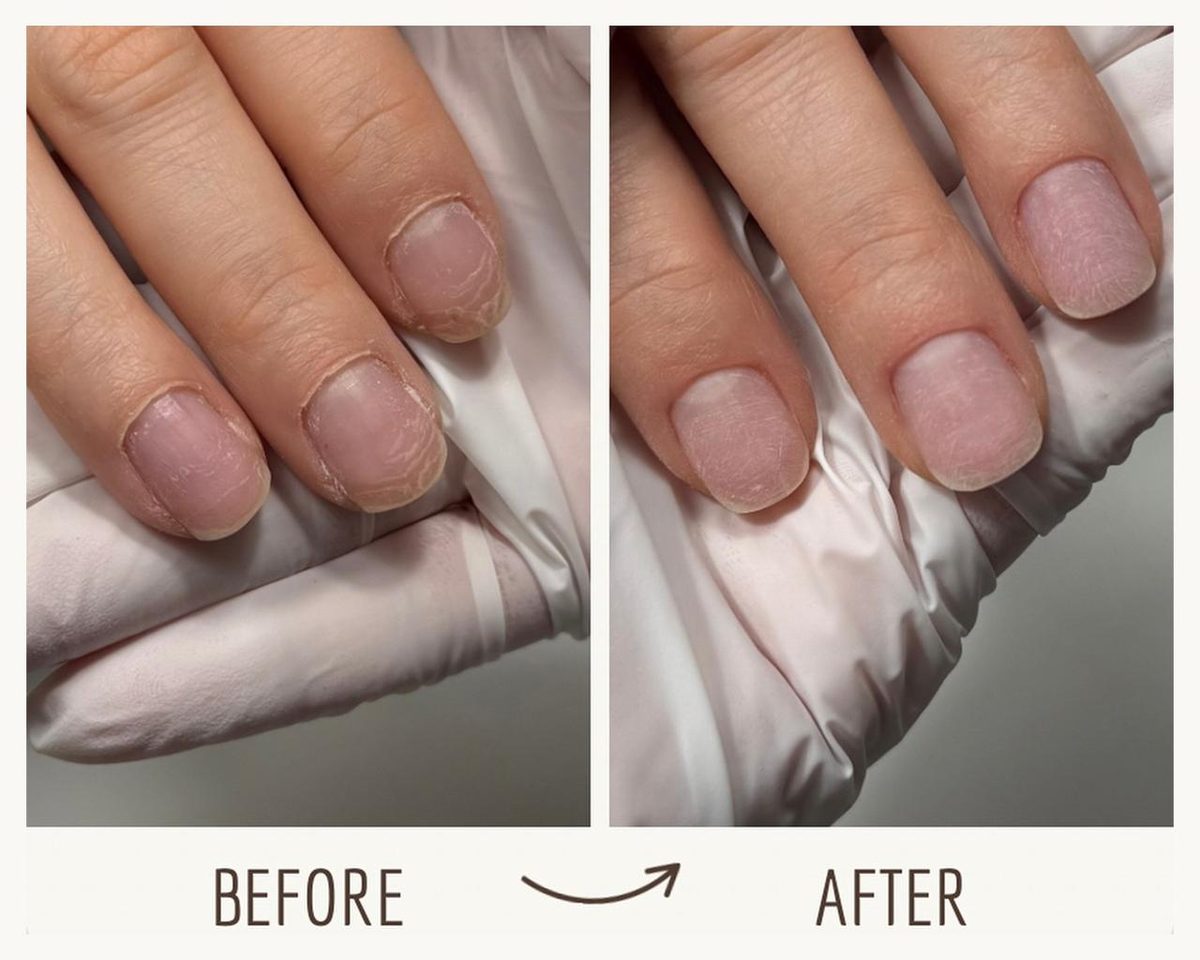
“Russian manicure vs regular manicure” is the comparison clients and new technicians ask about most, and the marketing around it muddies the water. Both are legitimate services with a place on the menu — they simply solve different problems. Here’s the honest, technical breakdown of how they differ and when each one is the right call.
What each one actually is
A regular manicure — also called a classic or cutting manicure, the one most people grew up with — softens the skin in a bath, then the cuticle is pushed back and trimmed with nippers or scissors. Because a wet nail must not be filed, the shape is created before soaking. It’s quick, gentle and forgiving.
A Russian (e-file) manicure is done completely dry. Instead of soaking, the technician uses an electric file with specialized bits to lift the cuticle, remove the dead pterygium bonded to the nail plate, and clean the sinuses — then, usually, refines the line with nippers or a ball bit. The result is a cuticle area cleaned far more thoroughly than a bath and a push-back can achieve.
Worth naming two neighbors you’ll hear about: the European manicure is a non-cutting, hygienic version that removes keratinized skin with a stick or acids, and the combined manicure pairs the e-file with nippers — which is, in practice, what most “Russian” services are.
Side by side
| Russian (e-file) | Regular (classic) | |
|---|---|---|
| Prep | Dry — no soaking | Wet — soften in a bath |
| Main tool | Electric file with diamond bits | Nippers, scissors, pusher |
| Cuticle approach | Removes dead pterygium and cuticle for an ultra-clean line | Pushes back and trims the cuticle |
| Polish placement | Sits flush to — or just under — the cuticle | A visible margin remains |
| Typical gel wear | ~3–4 weeks (more with builder gel) | ~1–2 weeks |
| Appointment time | Longer — detailed prep | Shorter |
| Skill required | High — anatomy and e-file control | Moderate |
| Typical cost | Premium — commonly $65–$180+ depending on market | Lower |
Why dry prep changes the result
The single biggest reason a Russian manicure outlasts a regular one is the absence of water. Soaking swells the nail plate; when it later contracts, the coating can lift and a gap appears at the cuticle. Working dry means gel bonds to a clean, stable plate. Add the fact that the dead pterygium has been removed — so polish adheres directly to the plate and sits flush to the cuticle — and you get the near-airbrushed look the technique is known for, plus a manicure that grows out gracefully instead of chipping. If you want the mechanics in detail, see how long a Russian manicure lasts and why.
Russian manicure vs gel manicure
This comparison mixes two different things. A Russian manicure is a prep technique — how the cuticle and nail plate are prepared. A gel manicure is a coating — the polish that goes on top. Most Russian manicures actually finish with gel polish, often applied very close to the cuticle.
Prep technique and coating are two separate choices
Every manicure combines one way of preparing the nail with one finish. Naming both avoids most of the confusion in salon menus:
| What it describes | Examples | |
|---|---|---|
| Prep technique | How the cuticle, the sidewalls and the nail plate are prepared before anything is applied | Russian (dry e-file), regular (soak, push and trim), combined (e-file plus nippers), European (no cutting) |
| Coating | What is applied on top of the prepared nail, and how it is cured or removed | Regular polish, gel polish, builder gel, acrylic — or no coating at all |
So “Russian manicure with gel polish” and “regular manicure with gel polish” share a coating and differ only in prep, while “Russian manicure, no polish” is perfectly normal too: the clean cuticle line is the result in itself.
So the real question is how gel over dry, e-file prep compares with a standard gel manicure on wet prep. The coating is the same; the prep is what changes the wear. A standard gel manicure typically lasts about 2–3 weeks, while gel over a Russian manicure lasts about 3–4 weeks — and 4–5 weeks with builder gel — because the plate stays dry and the dead cuticle tissue is fully removed. The numbers are broken down in how long a Russian manicure lasts.
Safety and skill: the real difference
A regular manicure is lower risk largely because it asks less of the technician. A Russian manicure demands genuine knowledge of nail anatomy and precise e-file control, because the work happens millimeters from living tissue. In trained hands it’s one of the cleanest, safest services available; in untrained hands it’s where injuries happen. Mainstream dermatology is more cautious still: the American Academy of Dermatology advises never cutting cuticles, and the Mayo Clinic notes that cuticles seal the skin to the nail plate, so removing them can lead to infection. The rule that applies to both: a technician works dead tissue only and never cuts living skin. We cover this fully in is a Russian manicure safe.
Which should you choose?
For a client, it’s about priorities:
- Choose regular for something quick, affordable and low-commitment — ideal if you change colors often or want a gentle option.
- Choose Russian for the cleanest possible finish and the longest wear, and when you’re happy to pay a premium for a longer, more detailed appointment.
A gentler regular manicure is also the better choice on nails that are thinned, damaged or showing any sign of infection — a properly trained technician will steer you there rather than push the e-file.
For a technician deciding what to offer
Offering the Russian manicure well is a genuine skill upgrade: it commands a higher price, retains clients through longer wear, and differentiates you in a market where demand is climbing fast. The catch is that it only pays off if it’s done properly — which means learning the anatomy, the e-file work and the cuticle technique as a system. That’s exactly what our Russian manicure training online — the Advanced Clean Manicure System — is built to teach. Comparing options first? Read how to choose an online Russian manicure course.