Basics
What Is a Russian Manicure?
A dry, e-file manicure built around an exceptionally clean cuticle line — what the name really means, how it works and where its limits are.
A Russian manicure is a dry manicure technique. Instead of soaking the hands, the technician uses an electric file (e-file) with fine bits — and usually nippers — to lift the cuticle and remove only dead tissue, including the thin film of pterygium stuck to the nail plate. The result is a very clean cuticle line that lets gel or polish sit close to the skin and grow out neatly. It is a way of preparing the nail, not a type of polish.
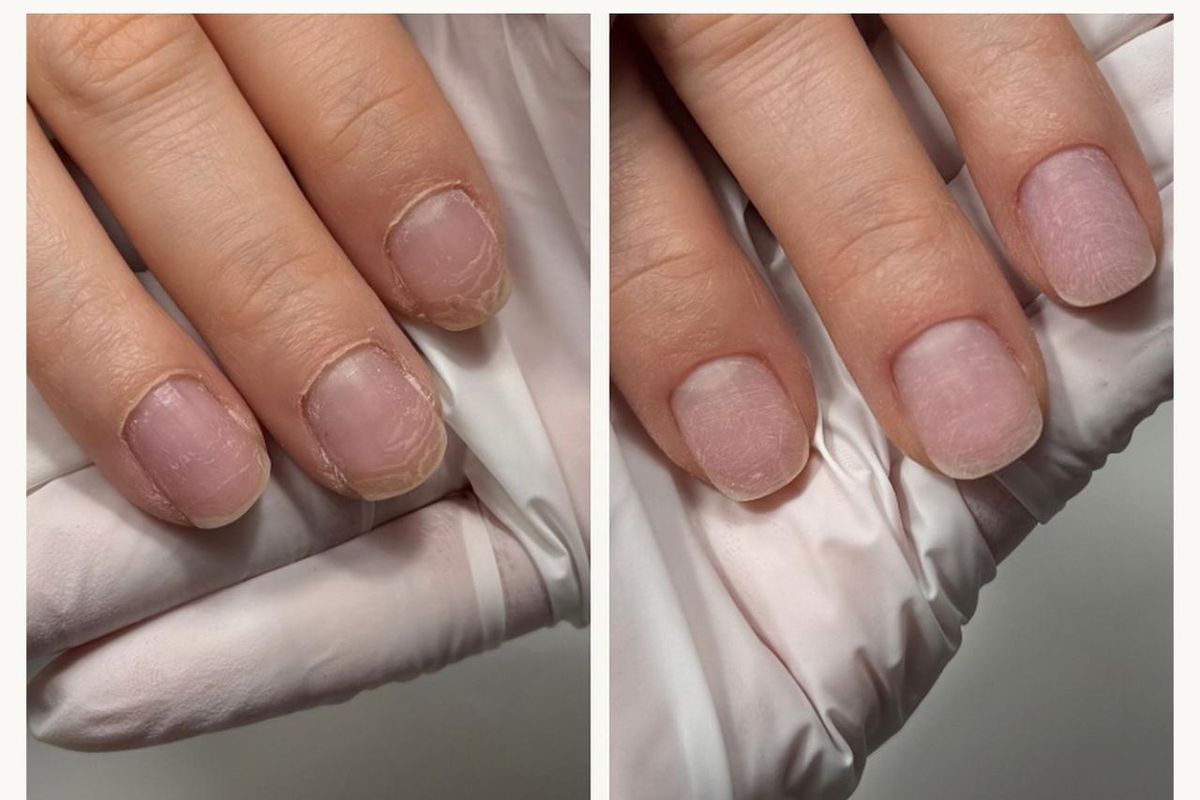
“Russian manicure” is one of the most searched nail services and one of the most loosely used names on salon menus. Some salons mean any e-file manicure; others mean polish applied very close to the cuticle. This guide explains what the term actually describes, the tools and the process, who learns it, and where the method’s limits are.
What does “Russian manicure” mean?
The name refers to where the method took shape, not to a brand or a quality grade. According to Marie Claire, which interviewed board-certified dermatologist Dr. Dana Stern, the technique originated in Russia in the 1990s and spread through Eastern Europe before social media made it popular worldwide. You will also see it called an e-file manicure, a dry manicure or, when the e-file is combined with nippers, a combined manicure.
All of these names describe the same idea: a dry, precise preparation that removes the dead skin around the nail with an e-file, so the finish looks sharper and grows out more neatly.
A technique, not a polish
The most common confusion is between prep and coating. A Russian manicure is a preparation technique: it decides how the cuticle, the sidewalls and the nail plate are prepared. The coating is a separate choice — gel polish most often, but also regular polish, builder gel or no polish at all. That is why “Russian manicure vs gel manicure” really compares two different layers of the service. The full breakdown is in Russian manicure vs regular manicure (and vs gel).
The tools
- An e-file with adjustable speed and a forward/reverse switch.
- Diamond cuticle bits: a flame or needle to open the cuticle pocket and lift pterygium, and a small ball to lift and refine the cuticle line.
- Carbide or ceramic bits to remove old gel.
- Silicone polishers that smooth the skin — never the nail plate.
- Nippers or scissors to trim the lifted dead cuticle, plus a pusher or orange stick.
- Single-use files and buffers, and a disinfection and sterilisation set-up for everything reusable.
Shapes, grits and safe speeds are covered in detail in e-file bits for Russian manicure.
How a Russian manicure is done
The service follows a fixed order and is done completely dry:
- Remove the old coating with a carbide or ceramic bit, leaving a thin layer rather than filing down to the bare nail.
- Shape the free edge.
- Open the cuticle pocket, gently separating the cuticle from the nail plate.
- Remove the pterygium and clean the sidewalls with a fine diamond bit at a speed matched to the skin.
- Trim the lifted dead cuticle with nippers, or with a ball bit.
- Refine the cuticle line so it stays clean as it grows.
- Prepare the nail plate, then apply base, colour and top coat.
Each step depends on the one before it, which is why the order is fixed. The professional sequence, with speeds and angles, is in how to do a Russian manicure step by step, and wear time is explained in how long a Russian manicure lasts.
Who learns the technique
Two groups usually come to it: beginners who want a structured foundation in anatomy, tools and safety before they practise on models, and practising nail technicians who already do classic or gel manicures and want cleaner cuticle work and longer wear. In both cases, check the licensing rules where you work: a course teaches the method, but it doesn’t replace a license where one is required.
Where the method has limits
A Russian manicure is not the right service for every hand, and not every caution is about technique:
- Living skin is off limits. The method removes only dead tissue. The eponychium — the living fold at the base of the nail — protects the nail matrix, and cutting into it causes bleeding and opens the way to infection.
- Dermatologists are cautious about cuticle removal. The American Academy of Dermatology advises people never to cut or forcefully push back their cuticles, and Dr. Stern notes in Marie Claire that the cuticle is the nail’s natural protective seal: removing too much can lead to chronic paronychia, an infection of the nail fold, and aggressive work can change skin pigment, especially on darker skin.
- Contraindications come first. Signs of infection or fungus, open cuts, inflamed skin, or very thin and damaged nails mean postponing the service or choosing a gentler one.
- The result depends on the hands that do it. The same e-file that gives a clean line in trained hands over-files the plate or tears skin when the speed, pressure or angle is wrong. Reusable tools must be cleaned and sterilised between clients: the CDC advises salons to sterilise shared nail tools before each use.
In short: the clean line is the part clients see; training is the part that keeps it safe. More on this in is a Russian manicure safe?
Learning the method
Our Russian Manicure Course Online (the Advanced Clean Manicure System) is a 60-page illustrated PDF guide in 19 modules, from nail anatomy and e-file principles to cuticle technique, nail preparation and sanitation, with an online exam and a certificate of completion. You can read sample pages before you buy. It is written material for independent study, so plan practice on models alongside it.
Sources
- Marie Claire: Russian Manicures Are Why Everyone’s Nails Suddenly Look Perfect (February 27, 2024), with comments from dermatologist Dr. Dana Stern.
- American Academy of Dermatology: Manicure and pedicure safety.
- Centers for Disease Control and Prevention: Healthy Habits — Nail Hygiene.